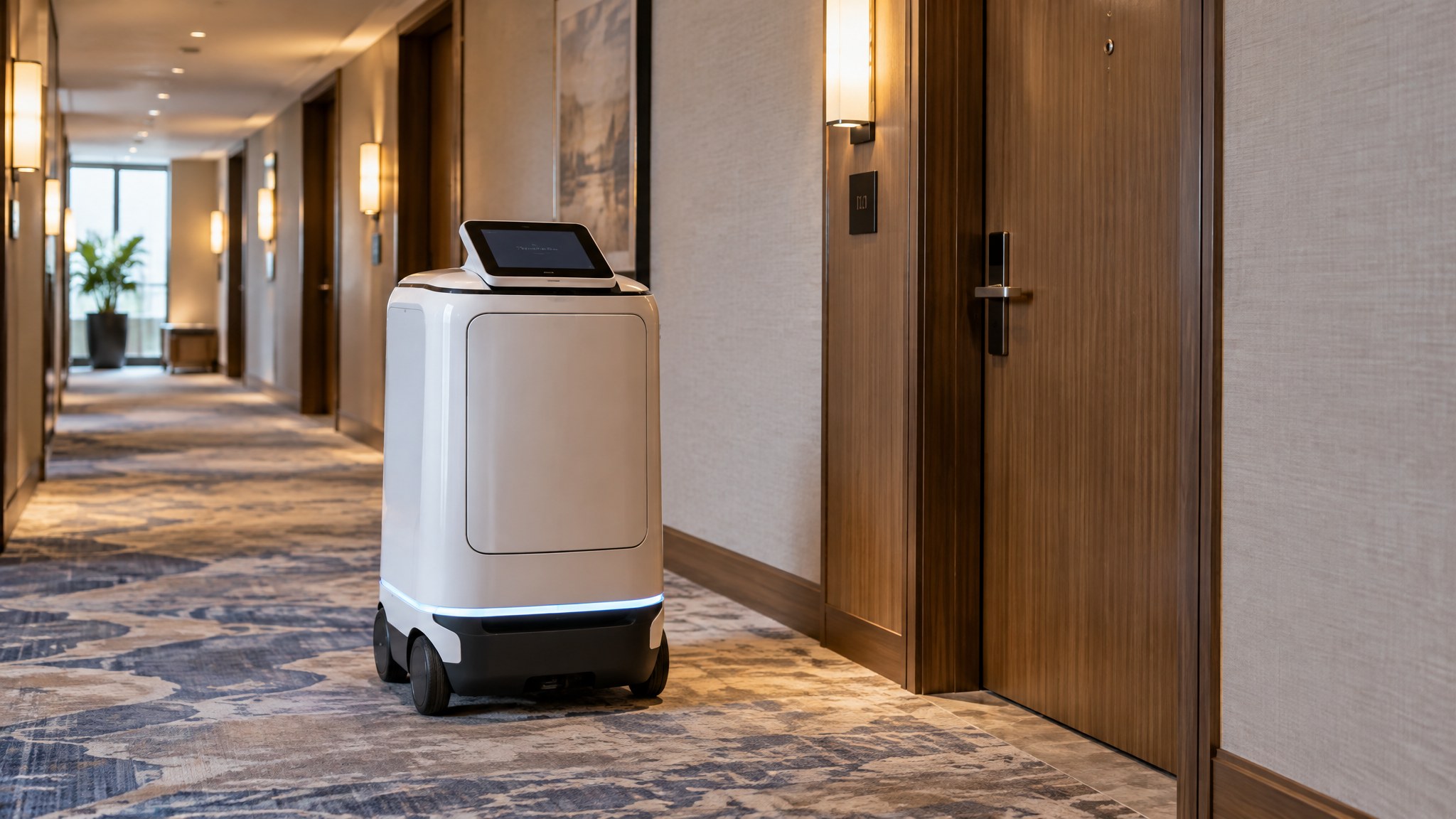
For a first warehouse AMR project, consider a repetitive internal transport task with a clear route, predictable load and measurable workload. Assess the process and site before choosing hardware. WIRABOT offers AMR solutions for warehousing and manufacturing, with suitability depending on the application.
What is an AMR?
An autonomous mobile robot, or AMR, uses onboard sensing and navigation software to move within an operating environment.
The robot's navigation is only part of the solution. Completing a warehouse task may also require a suitable load-handling attachment, charging arrangement, software integration and defined procedures for staff.
Do not assume that every AMR can lift pallets, handle totes or replenish shelves.
Look for a clear first task
Potential tasks to assess include:
- Moving materials between storage and a packing area.
- Delivering components to defined production points.
Map the existing process
Before requesting a proposal, record:
- Trips per shift.
- Typical and maximum load dimensions and weight.
- Travel distances and waiting time.
- Pickup and drop-off arrangements.
- Busy periods and route obstructions.
- Staff time involved in moving and handling loads.
Separate travel time from loading, unloading and waiting. Automating movement will not necessarily remove delays elsewhere.
Check site readiness
- Aisles and turning space — The robot and load need suitable clearance.
- Floors, slopes and thresholds — Conditions must fit the selected platform.
- Pedestrian and forklift traffic — Shared routes require a safety assessment.
- Doors and access controls — The robot may need integration or assistance.
- Connectivity — Requirements depend on the proposed system.
- Charging location — Charging must fit the workflow and site rules.
A site survey should identify constraints before a firm deployment scope is agreed.
Measure the result that matters
A robot completing a route is not the same as improving operations.
Useful pilot measures include completed deliveries, task time, staff interventions, queueing and missed handoffs. Record a baseline first and compare under similar operating conditions.
Include staff feedback. A solution that transfers hidden work to another team may not deliver the improvement expected.
Where WIRABOT can help
WIRABOT works with AMR manufacturers to offer solutions for different operating environments. A practical consultation should begin with your workflow, loads, layout and constraints—not a predetermined robot model.
Frequently asked questions
Can an AMR work in an existing warehouse?
Potentially, but suitability depends on the layout, traffic, floor conditions and task.
Will an AMR replace an entire warehouse role?
Not necessarily. It may automate a transport activity while staff retain loading, exceptions and other responsibilities.
What should we automate first?
Start by assessing a bounded, repetitive task that can be measured reliably.
Bring a workflow, not just a robot enquiry
Discuss warehouse AMR options with WIRABOT. Share a layout, load details and a typical shift's transport activity to support an initial assessment.
Bring WIRABOT to Your Next Event
Premium humanoid robots with full-service support. Let's talk about how to make your activation unforgettable.
Get a Quote