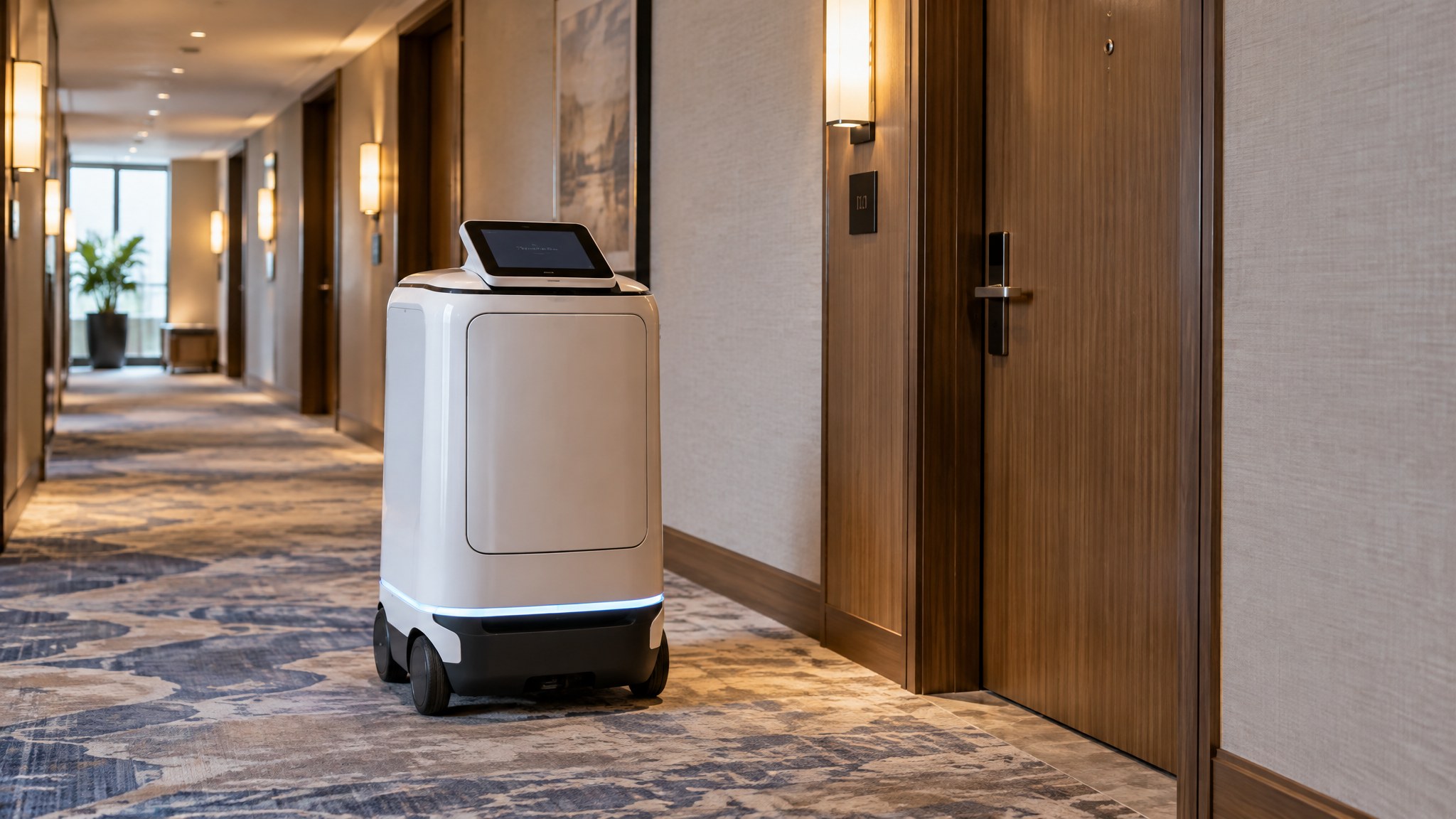
An AMR deployment budget should include more than the robot's purchase price. Malaysian warehouse buyers should account for load-handling equipment, software, integration, site preparation, commissioning, training and ongoing support. A credible quote needs a defined workflow and operating requirements. WIRABOT offers AMR solutions across its robotics services.
Why a hardware price is not a project price
Two robots with similar specifications may require very different deployments.
One application might involve moving containers between fixed stations. Another might require automatic loading, controlled doors and connections to warehouse software.
Break the quote into understandable parts
- Robot hardware — Mobile platform and selected configuration.
- Load handling — Shelves, carts, conveyors or other task-specific equipment.
- Charging — Chargers and any required installation.
- Software — Fleet tools, licences and subscriptions.
- Integration — Connections to business systems and site equipment.
- Commissioning — Mapping, setup, testing and acceptance.
- Training — Operator, supervisor and maintenance familiarisation.
- Support — Maintenance, troubleshooting and agreed service coverage.
Not every project requires every item. Ask suppliers to identify what applies, what is excluded and what remains provisional.
Identify who owns each dependency
Integration costs can become unclear when several parties are involved.
Your warehouse software provider, building management team, equipment supplier and robotics provider may each have responsibilities.
For example, a robot reaching a controlled door does not establish that it can open it. Confirm who supplies the interface, obtains permission, performs testing and supports faults.
Assess ongoing costs
Ask about recurring software fees, maintenance, wear items, batteries and technical support.
Also consider internal costs: staff supervision, exception handling, charging checks and process administration. These remain relevant even when some activities are automated.
For RaaS proposals, establish which costs sit within the recurring fee and which remain separately chargeable.
Build a business case from your own baseline
Estimate benefits using measured operational data rather than generic savings percentages.
Consider whether the project is intended to reduce travel time, improve delivery consistency, increase capacity or support a difficult shift pattern.
Distinguish between staff time released for other work and an actual reduction in expenditure. They are not interchangeable.
Use a pilot to test important assumptions before committing to a larger rollout.
How to request a useful quote from WIRABOT
Provide your task description, site layout, load information, operating hours and required system connections.
WIRABOT offers AMR solutions and purchase, rental and RaaS options across its robotics services. Confirm which commercial arrangements apply to your proposed deployment.
Frequently asked questions
Can we get a fixed price without a site assessment?
An initial indication may be possible, but unresolved site and integration requirements can limit its accuracy.
Is one robot enough?
Fleet size depends on task volume, route time, charging and operating requirements—not simply warehouse size.
Should we choose the lowest quote?
Compare equivalent scope, assumptions, acceptance criteria and support before deciding.
Budget for the working solution
Contact WIRABOT about an AMR assessment and request a breakdown that separates hardware, implementation and recurring costs.
Bring WIRABOT to Your Next Event
Premium humanoid robots with full-service support. Let's talk about how to make your activation unforgettable.
Get a Quote